


China has moved to tighten controls over precursor chemicals used to produce fentanyl, a highly addictive drug that has fueled the opioid crisis in the United States. This marks another step by Beijing to ease tensions with Washington.
On November 10, China’s Ministry of Commerce, along with four other government agencies, added 13 chemicals to the list requiring export permits to the U.S., Mexico, and Canada.
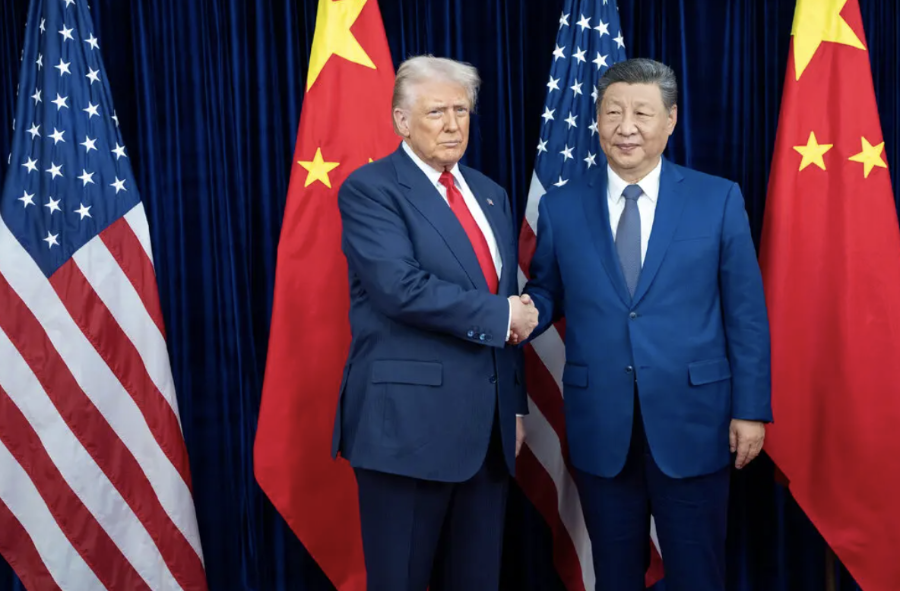
The move is seen as part of Beijing’s efforts to implement agreements reached between the two countries after Chinese President Xi Jinping and U.S. President Donald Trump held a summit in South Korea in late October.
Following that meeting, China has taken several measures to de-escalate tensions with the U.S., including announcing the suspension of investigations into U.S. semiconductor companies and imposing a one-year pause on export controls over critical minerals needed to produce certain semiconductors, explosives, armor-piercing ammunition, batteries, and nuclear reactors.
On the same day, November 10, China’s Ministry of Commerce also announced a one-year suspension of sanctions against five subsidiaries of South Korean shipbuilding group Hanwha Ocean.
China’s Ministry of Transport said it would suspend retaliatory measures previously introduced against U.S. actions targeting China’s shipping industry, including port fees. Earlier, on October 9, the Office of the U.S. Trade Representative (USTR) had announced that the U.S. would suspend its own measures against China’s shipping industry for one year.
Speaking to The New York Times, Wu Xinbo, Director of the Institute of International Studies at Fudan University in Shanghai, said the U.S. and China are beginning to implement what was agreed upon at the recent summit. “Both sides are moving from negotiation to implementation. This shift will create greater momentum for the two sides to work on other issues in the bilateral agenda,” Wu said.
The flow of chemicals used to manufacture fentanyl has long been a major source of tension between Washington and Beijing.
U.S. officials have accused China of failing to do enough to stop the flow of these precursor chemicals into the U.S., where fentanyl is believed to be responsible for tens of thousands of deaths each year.
Chinese officials, however, argue that the fentanyl crisis stems from the U.S.’s inability to curb domestic demand for the drug.
The U.S. maintains that Chinese companies are the largest suppliers of precursor chemicals and equipment used to produce illegal fentanyl, and that these substances mostly reach the U.S. via land routes—especially through Mexico. In late October, the Canada Border Services Agency announced that several months earlier it had seized 4,300 liters of precursor chemicals originating from China.
President Trump’s administration cited the fentanyl issue when imposing a 20% tariff on Chinese goods earlier this year, marking the start of a series of escalating tariffs that brought trade between the world’s two largest economies nearly to a standstill.
The summit between Xi and Trump in South Korea led to the U.S. halving its fentanyl-related tariffs on Chinese goods to 10%, suspending port fees on Chinese vessels, and pausing export controls that could restrict Chinese companies’ access to U.S. technology.
In return, China agreed to resume purchases of U.S. soybeans, suspend export controls on rare earths, and take stronger action to curb the flow of fentanyl precursor chemicals.


















Leave a Reply