


Risk appetite surged visibly on news that the U.S. government may soon escape a shutdown that has lasted nearly six weeks.

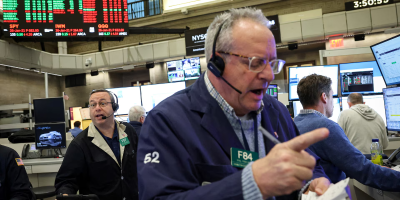
U.S. stocks rose on Monday (November 11) as the Senate took a key step toward ending the government shutdown. The development also pushed oil prices higher, although gains were capped by lingering concerns about a global oil supply glut weighing on investor sentiment.
At the close, the Dow Jones Industrial Average climbed 381.53 points, or 0.81%, to 47,368.63. The S&P 500 rose 1.54% to 6,832.43, while the Nasdaq Composite advanced 2.27% to 23,527.17.
The rally was led by artificial intelligence (AI) stocks such as Nvidia and Broadcom — both key drivers of the market’s recent bull run. Risk appetite increased sharply following reports that the U.S. government may soon reopen after nearly six weeks of shutdown.
Microsoft shares gained 1.9% during the session, ending an eight-day losing streak — its longest since 2011. Last week, AI-related stocks had been the main drag on U.S. indexes as Wall Street investors worried that AI valuations had become excessively inflated.
Late Sunday night (U.S. time), the Senate advanced a temporary budget bill to reopen the government. This was a key step forward, but the bill must still pass both the Senate and the House and be signed into law by President Donald Trump before normal government operations can resume.
The bill would fund federal agencies through January 2026 and partially reverse recent federal employee layoffs, while providing future job protections for civil servants. It does not expand the Affordable Care Act as requested by Democrats, but it does call for a vote on healthcare subsidies in December.
This positive turn comes amid signs of weakening consumer sentiment. A University of Michigan survey released the previous Friday showed U.S. consumer confidence falling to its lowest level in more than three years. The ongoing government shutdown had also delayed the release of key federal reports on employment, spending, and inflation.
“It’s been a very challenging November for risk assets,” said Tim Holland, Chief Investment Officer at Orion, speaking to CNBC. He cited investor worries about the government shutdown and a potential AI stock bubble. However, Holland added that with the government reopening, Trump’s tax-cut policies, strong corporate earnings growth, and favorable seasonal trends, investors are likely to remain relatively optimistic about the economy and risk assets for the rest of the year.
In energy markets, Brent crude futures in London rose $0.43, or 0.68%, to settle at $64.06 a barrel. West Texas Intermediate (WTI) crude futures in New York gained $0.38, or 0.64%, to close at $60.13 a barrel.
News that the U.S. government may soon reopen supported oil prices, though the market continued to face downward pressure from oversupply concerns. Oil prices had fallen 2% the previous week.
After months of rising output from the OPEC+ alliance — which includes the Organization of the Petroleum Exporting Countries (OPEC) and non-member producers such as Russia — signs of a global oil glut have become more evident. These include higher U.S. oil inventories and a doubling of crude volumes stored on tankers in Asian waters in recent weeks.
However, Tamas Varga, an analyst at PVM Oil, noted that Russian oil supply is increasingly constrained by Western sanctions — a factor likely to continue supporting oil prices in the near term.











Leave a Reply