


Investors in global financial markets are undergoing a significant shift in expectations regarding whether the U.S. Federal Reserve (Fed) will continue cutting interest rates at its December meeting.
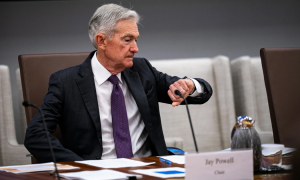
This shift stems from clear signals by Fed officials indicating growing divisions within the central bank.
Over the past week, market-implied odds of a 0.25-percentage-point rate cut at the Fed’s final meeting of 2025 fell from nearly 70% to 40%. The drop came as several members of the Federal Open Market Committee (FOMC) expressed disagreement with continuing rate cuts at the upcoming December 10 meeting.
The shift in rate expectations contributed to a sell-off in equities and a rise in the yield on 2-year U.S. Treasury notes last week, alongside concerns that valuations of artificial intelligence (AI) technology stocks may have climbed too high.
Krishna Guha, vice-chairman of Evercore ISI, said it has become difficult to predict the Fed’s direction for December. In the past two policy meetings, the Fed cut rates by 0.25 percentage points each time, citing signs of a weakening labor market and evidence that President Donald Trump’s tariff actions were having less inflationary impact than initially feared.
However, the October vote revealed a rare split within the Fed, with three distinct viewpoints. Fed Governor Stephen Miran, a close ally of President Trump, backed the White House’s call for a more aggressive rate cut by proposing a 0.5-percentage-point reduction. In contrast, Kansas City Fed President Jeff Schmid favored holding rates steady. The remaining members voted for the 0.25-point cut.
At the press conference following the October meeting, Chair Jerome Powell signaled that nothing guaranteed another rate cut in December. Shortly afterward, several non-voting regional Fed presidents spoke out against the November cut, arguing that the Fed should have kept rates unchanged because inflation remained far above target.
Jonathan Millar, economist at Barclays, predicts that the December meeting will feature a fierce debate among policymakers at the world’s most influential central bank.
On Friday, Schmid reiterated that the Fed should keep rates in the 3.75%–4% range, saying nothing in current economic or market conditions indicates that policy is overly restrictive.
Boston Fed President Susan Collins, seen as aligned with core FOMC decision-makers, also said last week that it would be more appropriate for the Fed to keep the federal-funds rate where it is for a while longer rather than continue cutting.
On Thursday, Minneapolis Fed President Neel Kashkari—currently a non-voter—shifted from supporting further rate cuts to supporting a pause in December.
Diane Swonk, chief economist at KPMG, noted that investors had expected weak economic data to pressure the Fed into cutting rates. But after the U.S. government reopened last week, it remains unclear whether October inflation and labor-market data will even be released.
Swonk said the Fed is hesitant about continuing to cut rates because the economy contains many unpredictable factors. She also noted that certain inflation pressures in the services sector have not been fully resolved. U.S. consumer prices (CPI) for September rose a weaker-than-expected 3% year-over-year, but this pace still exceeds the Fed’s 2% inflation target. Minutes from the October meeting, expected to be released this Wednesday, may shed more light on internal FOMC divisions.
Regardless of whether the Fed decides to cut rates by year-end, some analysts believe Powell will face a difficult task in reducing internal disagreements.
Within the Fed’s Board of Governors, three members—Chris Waller, Michelle Bowman, and Miran—favor easier policy. All were appointed by President Trump. They may vote against holding rates steady in December, raising the possibility that, for the first time since 1988, three governors could dissent from the majority.
Guha said that unless there is a major surprise in the economic data that helps clarify the Fed’s decision, Powell is clearly in a very challenging position.














Leave a Reply