


Closing his hedge fund is likely not a “surrender” by Burry. Instead, his continued warnings about the AI frenzy suggest he remains steadfast in his belief that it is a bubble.
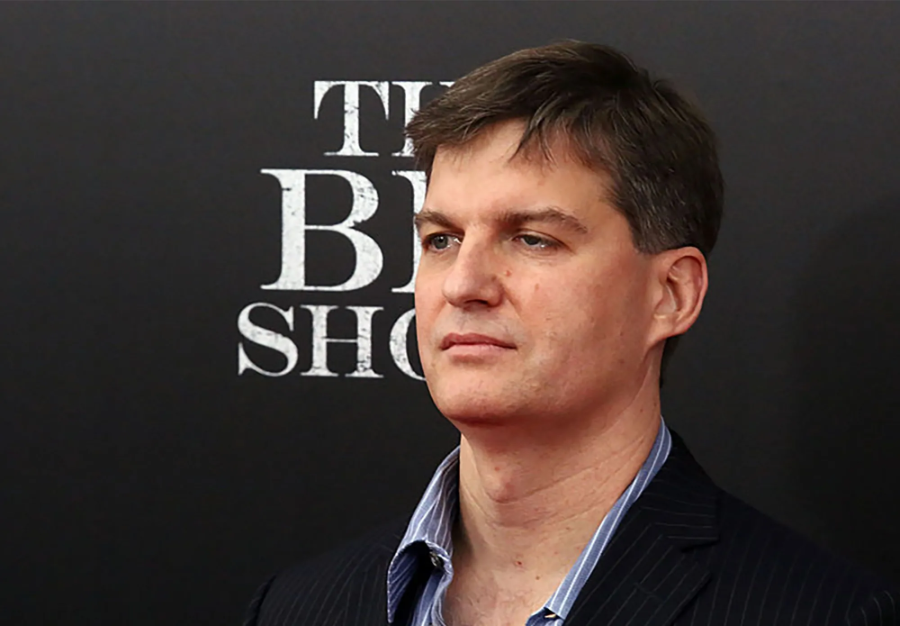
American short-selling legend Michael Burry, nicknamed “The Big Short,” has just launched a newsletter warning about the artificial intelligence (AI) stock craze. This move comes only a few days after he shut down his hedge fund.
In the first issue of the newsletter, titled “Cassandra Unchained” on the Substack platform, Burry—who has repeatedly voiced skepticism about the AI boom—directed sharp criticism at Nvidia and other major tech companies heavily investing in AI.
“In the current AI trend, there are five horsemen—Microsoft, Google, Meta, Amazon, and Oracle—along with several young startups—committing nearly 3 trillion USD to AI infrastructure over the next three years. Investors are completely thrilled about this,” Burry wrote.
“And once again, there is a Cisco at the center of all this, providing everything needed and the expansive vision for the trend. And that Cisco is Nvidia,” he said, comparing Nvidia’s role in today’s AI frenzy to Cisco’s role during the dot-com bubble.
“I haven’t retired,” Burry wrote regarding the closure of his hedge fund. He explained that he will now focus his time and effort on his new financial newsletter, which will feature at least one post each week. Shortly after launch, the newsletter accumulated more than 21,000 subscribers. The subscription costs 39 USD per month or 379 USD per year.
Burry has intensified his warnings about the AI frenzy recently. Before releasing the newsletter, he frequently posted about the issue on his X (formerly Twitter) account, which has 1.6 million followers, targeting names like Nvidia and Palantir. He questioned the boom in cloud infrastructure and accused these companies of using accounting tactics to inflate profits. He argued that, just like in past bubbles, regulators today are ignoring “red alert” warnings.
In a post on X this past Sunday, Burry cited a remark from former Fed Chair Alan Greenspan in 2005 that “a nationwide housing bubble seems unlikely.” He compared this statement to recent comments from current Fed Chair Jerome Powell: “AI companies are in fact making profits… so it’s a completely different story.”
Despite Greenspan’s optimism at the time, Burry correctly predicted the collapse of the U.S. subprime mortgage market in 2007–2008. That prediction gave him the opportunity to become a legendary short seller—and he seized it. He implemented a short-selling strategy based on his forecast of the market’s collapse and the resulting financial crisis, earning an estimated 800 million USD in profits.
That famous bet inspired The Big Short, the 2016 Oscar-winning film for Best Adapted Screenplay. Wall Street investors closely follow Burry’s commentary on markets and the economy. His trades are often dissected by traders searching for early signs of bubbles or overheated markets.
Before launching the newsletter, Burry had repeatedly sparked headlines. Early last week, he stunned the market when a filing with the U.S. Securities and Exchange Commission (SEC) revealed that his hedge fund, Scion Asset Management, held large put-option positions tied to Nvidia and Palantir stock. Put options profit if the underlying stock drops sharply.
But only a few days later, he announced that Scion Asset Management would be dissolved and investor capital returned, rather than closing the fund’s short positions. As of March this year, Scion Asset Management oversaw 155 million USD in assets under management.
In a letter to clients, he explained that his value-driven philosophy often runs counter to market trends—implying that his strategy is not suited for managing other people’s money.
Indeed, in late August, Scion Asset Management disclosed bearish bets against U.S. stock indexes; however, the indexes subsequently continued to hit new all-time highs.
By betting against the AI trend, Burry entered a public clash with Palantir CEO Alex Karp on X, similar to his confrontation years earlier with Tesla CEO Elon Musk when he shorted Tesla shares. Burry exited his Tesla short position at the end of 2021.
Scion Asset Management’s closure triggered memories of the intense pressure Burry faced from Scion Capital investors—his pre-2008 fund—when he bet against the subprime mortgage market and warned of the looming crisis.
In a 2010 New York Times article, Burry recalled: “In 2005–2006, I argued as forcefully as possible in letters to investors of my firm, Scion Capital, that the mortgage market would collapse in the second half of 2007, causing broad damage to the economy.” However, those early warnings were ignored, and he spent months battling pushback from investors unwilling to continue paying high premiums for credit default swaps.
Burry said the resistance was so intense that he had to restrict redemptions while maintaining the positions that ultimately made him famous.
Observers believe the hedge-fund shutdown is not a capitulation by Burry. Instead, his ongoing warnings about the AI mania show he remains convinced it is a bubble. Some speculate that he may be shifting to a family-office model to free himself from client pressure and make bets solely with his own capital.
Burry was born in San Jose, California. He graduated from Vanderbilt School of Medicine and never formally studied finance. He quit medicine, burdened with 145,000 USD in debt, and entered investing—a field he described as “a hard place” where profits “hide.”











Leave a Reply