


The U.S. Federal Reserve (Fed), long known for its consensus-driven approach to policymaking, is facing the risk of deep internal division ahead of upcoming meetings on interest-rate policy. This raises concerns that market signals could become muddled, weaken the clarity of monetary policy, and even fuel fears about the Fed’s political independence.
Since this past summer, the Fed has faced a dilemma: inflation has stopped falling as quickly, while the labor market is showing signs of weakening. Its two core mandates — maintaining inflation at 2% and achieving maximum employment — are now in clear conflict for the first time in years. Matters have been complicated further by a 43-day U.S. government shutdown, which delayed the release of key economic data.
Ahead of the December 9–10 meeting, members of the Federal Open Market Committee (FOMC) appear to be splitting into two opposing camps: one pushing for rate cuts to support the labor market, and the other warning that easing too soon could reignite inflation.
According to sources, this month’s meeting will almost certainly see multiple dissenting votes, regardless of what the Fed decides on interest rates. Up to five of the twelve voting members have expressed concern about or opposition to further rate cuts, while a group within the Board of Governors in Washington wants rates to be lowered even more aggressively.
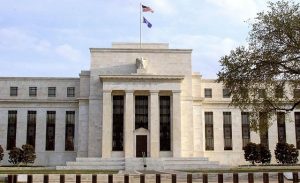
Fed Governor Christopher Waller has said that the December meeting may record the highest level of “non-consensus” seen in many years. Since 1990, only nine FOMC meetings have produced three or more dissenting votes.
Fed Chair Jerome Powell has not revealed his position for the upcoming meeting. However, New York Fed President John Williams — who serves as Vice Chair of the FOMC — has hinted that there is still “room to lower borrowing costs” in the near term. This has tilted market expectations toward another 0.25-percentage-point rate cut. Some analysts believe this could serve as a compromise solution, provided the Fed signals that future cuts will pause unless economic conditions deteriorate further.
Many FOMC members who oppose rate cuts say they remain open to shifting their views. Meanwhile, Waller — who has advocated for lower borrowing costs since signs of labor-market cooling emerged — said that decisions after December will depend heavily on the large volume of economic data expected once statistical agencies catch up after the shutdown.
Chicago Fed President Austan Goolsbee said he is willing to reconsider his stance based on the official policy statement. For him, the most important goal is achieving broad enough agreement rather than sticking to opposing viewpoints.
Richmond Fed President Thomas Barkin cautioned that focusing too much on “pro-cut vs. anti-cut” factions may cause dissenting members to lose influence in policymaking. He emphasized that, in many cases, holding a different opinion matters less than maintaining influence over the committee’s broader direction. Waller is now considered one of former President Donald Trump’s leading candidates for the Fed Chair position in the next term.
A recent study by the Chicago Fed found that Fed officials’ public comments have a stronger impact on financial markets when they are aligned with the Fed Chair’s stance. When messages are mixed, policy effectiveness weakens.
Financial analysts warn that the December meeting could become a “nightmare” for rate markets and risk assets, which are seeking clearer guidance from the Fed on the policy trajectory over the next 12 to 18 months.
Even so, the Fed is still viewed as moderate compared with other major central banks. The European Central Bank (ECB) almost always reaches high consensus, while the Bank of England (BoE) frequently sees split votes, including several 5-4 rate decisions this year.
At the Fed, dissenting votes are not unusual, especially under Bernanke and Yellen. However, most of those dissenters were regional Fed presidents, who rotate voting rights, rather than governors in Washington. This pattern has shifted since Donald Trump’s presidency, as many of his appointees have pushed more aggressively for rate cuts.
With Jerome Powell’s term as Fed Chair ending in May and Trump indicating a desire to expand his influence within the Fed, analysts worry that conflict between regional Fed presidents and the seven Board Governors could escalate.
Vincent Reinhart of BNY Investments predicts that policy outlook for 2026 will depend heavily on political dynamics — specifically, when the White House will secure a majority on the Board of Governors. If regional Fed presidents continue to frequently oppose policy decisions, it could raise the question of whether Congress should reconsider their voting rights in monetary policymaking.
Against this backdrop, the December Fed meeting may become a pivotal moment not just for financial markets but for the power structure within the world’s most influential monetary authority. Markets are waiting for an answer: Will the Fed continue cutting rates, or is it entering a period of deeper internal division than ever before?

















Leave a Reply