


In recent days, officials of the U.S. Federal Reserve (Fed) have continued to voice differing opinions about whether interest rates should be cut next month.
This debate has made the outlook for Fed interest rates even more uncertain and poses a challenge for Fed Chair Jerome Powell as he seeks to build internal consensus on the direction of monetary policy.
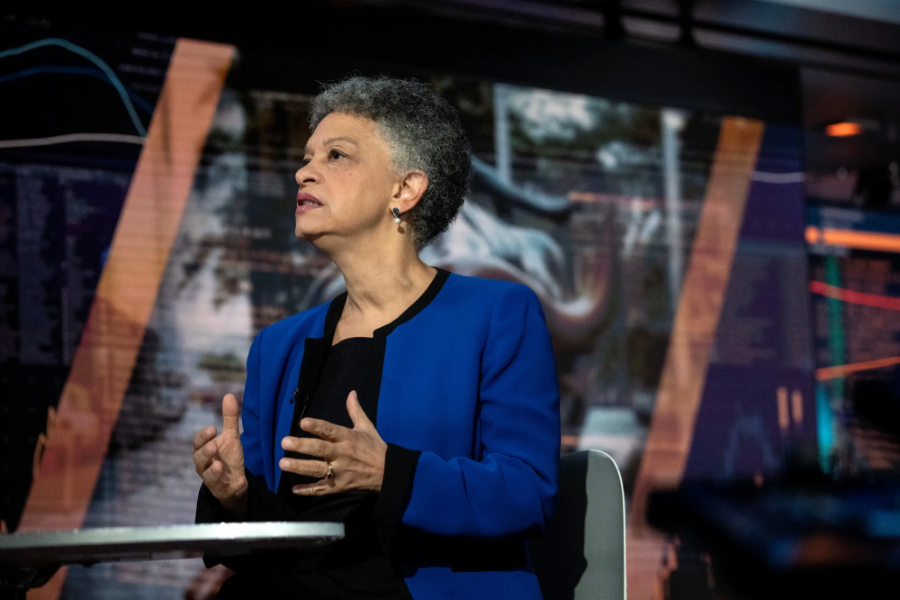
Over the past weekend, Susan Collins, President of the Boston Fed, said she did not see a strong need for further rate cuts at the December meeting.
Speaking on the sidelines of an economic conference on Saturday, Collins — a voting member of the Federal Open Market Committee (FOMC) this year — said that the two rate cuts of 0.25 percentage point each in September and October had shifted monetary policy only slightly toward anti-inflationary restraint.
Meanwhile, inflation in the U.S. remains significantly above the Fed’s target. Therefore, the current policy stance is likely appropriate, Collins noted, emphasizing that the strong performance of the U.S. stock market has supported the economy’s resilience.
“Overall financial conditions are accommodative rather than restrictive. That is an environment in which I do not see an urgent need for further policy easing,” the Wall Street Journal quoted Collins as saying.
This policymaker revealed that she has not yet decided how she will vote at the December meeting, nor whether she would oppose an interest rate cut if that decision were proposed.
This view is consistent with comments she has made since the Fed’s rate cut on October 29, including a speech earlier in November in which she said she saw a “relatively high bar” for further near-term rate reductions.
Her assessment was made before the U.S. Department of Labor released its delayed September employment report. According to the report published last week, the U.S. nonfarm sector added 119,000 jobs in September — far higher than expected — while the unemployment rate rose by 0.1 percentage point to 4.4%.
Commenting on the September jobs report, Collins said the data were “mixed and do not significantly change my view of the labor market.”
Building consensus within the Fed is proving increasingly difficult for Chair Powell. At the upcoming meeting, he may face a group of policymakers with opposing views — whether the Fed chooses to cut rates for the third time this year or to leave them unchanged.
A debate is underway among Fed officials about which risk poses the greater threat to the economy. One group — including two governors appointed by former President Donald Trump, Christopher Waller and Stephen Miran — highlights the slowdown in the labor market and argues that the Fed needs to cut rates further to prevent a sharp rise in unemployment.
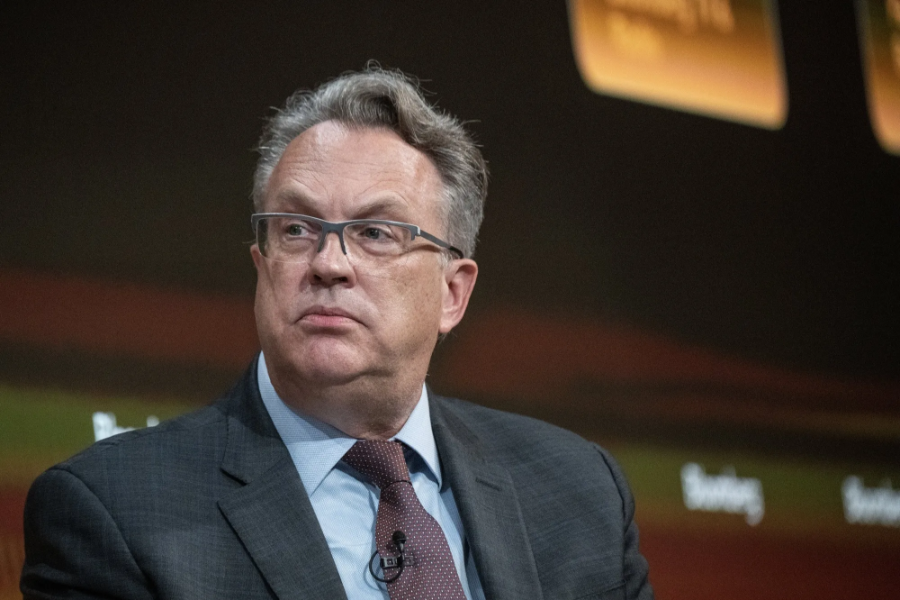
Last Friday, New York Fed President John Williams, a close ally of Powell, said that the conditions for a near-term rate cut may have been met. His statement prompted futures market traders to sharply increase their bets on a December rate cut to nearly 70%, up from 25% earlier in the week.
But another group, mainly regional Fed presidents who rotate voting rights on the FOMC, argues that persistent high inflation is the more serious risk to the economy.
In September, U.S. consumer prices rose 3% year-over-year, extending a period of more than four years in which inflation has exceeded the Fed’s 2% target. This situation has made Kansas City Fed President Jeff Schmid and St. Louis Fed President Alberto Musalem cautious about continuing to cut rates.
Tensions within the FOMC were clearly reflected in the minutes of the Fed’s October meeting released last week. Although no names were mentioned, the minutes suggest that some officials who supported a rate cut at that meeting had actually preferred to keep rates unchanged. This division within the Fed has only deepened as the world’s most powerful central bank approaches its final policy meeting of 2025.
Market bets on a 0.25-percentage-point rate cut at the upcoming meeting have fluctuated sharply in recent weeks — from Powell’s comment after the October meeting that no rate cut in December was guaranteed, to Williams’ statement last Friday that a December rate cut remained possible.
A major challenge for the Fed ahead of the December meeting is the lack of complete official economic data due to the U.S. government shutdown, which lasted more than six weeks before recently ending.
















Leave a Reply