


USD Exchange Rate on the Free Market Drops Sharply, Decline Nearly Nine Times Faster Than Bank Rates
On January 27, the U.S. dollar exchange rate on Vietnam’s free (informal) market fell by 1.16% compared with the previous session. Since the beginning of the year, the decline in the “black market” exchange rate has been nearly nine times steeper than the selling rate quoted by commercial banks.
On January 27, the State Bank of Vietnam announced a central exchange rate of VND 25,098 per USD, down VND 15 from the previous session. Accordingly, the ceiling rate was adjusted down to VND 26,352 per USD, while the floor rate stood at VND 23,843 per USD.
The USD/VND exchange rate between banks and customers continued to edge lower. Specifically, the buying rate fell by VND 38 to VND 25,940 per USD, while the selling rate declined correspondingly to VND 26,330 per USD.
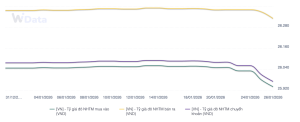
Notably, the decline was much sharper on the free market. The buying rate plunged by VND 250, from VND 26,600 to VND 26,350 per USD, while the selling rate dropped by VND 260 to VND 26,390 per USD.
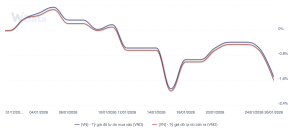
Since the start of the year, free-market exchange rates have fallen by 1.5% on the buying side and 1.6% on the selling side, compared with declines of just 0.41% and 0.18%, respectively, at commercial banks. The current slump in the “black market” rate is now nearly nine times stronger than that of the official rate.
The sharp movements on the free market come as Government Decree No. 340/2025/NĐ-CP is set to take effect on February 9, 2026. The decree specifies administrative penalties for violations in the monetary and banking sector, including foreign exchange activities and gold trading. Under the new regulations, illegal foreign currency trading outside the banking system will face strict penalties, and in certain cases, the foreign currency involved may be confiscated.
Alongside exchange-rate developments, global gold prices continued to rise, remaining above USD 5,000 per ounce for a second consecutive day. The trend has been supported by a weaker U.S. dollar, heightened global geopolitical tensions, and capital outflows from government bonds and traditional safe-haven monetary instruments.
Early on Tuesday (January 27), global gold prices rose by more than 0.8%, marking a seventh straight gaining session. The U.S. Dollar Index fell to its lowest level in nearly four years. Since the start of 2026, gold prices have climbed nearly 17%, reflecting expectations that interest rates will continue to decline further in the coming period—an environment that typically benefits precious metals.
Markets are awaiting President Donald Trump’s decision on appointing a new Chair of the U.S. Federal Reserve. A more dovish candidate would strengthen expectations that the Fed will continue cutting interest rates this year. However, according to the latest Bloomberg survey, most economists forecast that the Fed will keep rates unchanged until at least June 2026, after having implemented three consecutive rate cuts late last year.
Meanwhile, the U.S. government shutdown at the end of 2025 appears to have had little impact on economic growth, with fourth-quarter GDP still expected to expand at a healthy 2.1%.















Leave a Reply