


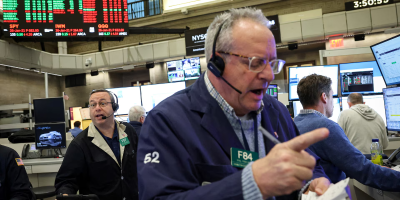
Asian stock markets rebounded after suffering their steepest two-day decline since April, as investor sentiment gradually stabilized following violent swings in the gold and silver markets. Early in the session, precious metal prices reversed course and surged sharply.
The MSCI Asia-Pacific Index rose 2.2%, nearly erasing Monday’s losses. Technology stocks led the recovery, with South Korea—widely seen as a hotspot for artificial intelligence (AI) and the best-performing market globally so far this year—jumping about 5% after a sharp sell-off in the previous session. Nasdaq 100 futures also advanced after Palantir released a more upbeat revenue outlook than expected.
In the commodities market, gold surged as much as 4.2%, or roughly $200, to around $4,850 per ounce, while silver jumped 8.1%. This rebound helped both precious metals recover a significant portion of their recent losses after heavy profit-taking triggered a sharp decline over the past two sessions, bringing an end to their prior record-breaking rally.

In contrast to the highly volatile sell-off seen in Asia on Monday, Wall Street closed higher as data showed U.S. manufacturing activity accelerating amid improving demand. This signal boosted optimism about the economic outlook and corporate earnings, suggesting that the U.S. manufacturing sector may be emerging from a three-year period of weakness.
Dilin Wu, a research strategist at Pepperstone, said bargain-hunting buying emerged during the New York session, helping stabilize markets toward the close. However, he cautioned that risks remain and investors should stay vigilant, as the rebound could prove to be only a short-lived technical recovery.
In a separate development, Indian assets drew attention after U.S. President Donald Trump announced that reciprocal tariffs on Indian goods would be reduced to 18%, following Prime Minister Narendra Modi’s agreement to halt purchases of Russian oil. The move is seen as easing bilateral tensions.
Indian equities are expected to improve performance after a prolonged period of underperforming the region, as a long-anticipated trade agreement with the U.S. is set to remove a major obstacle that had previously triggered record foreign capital outflows.















Leave a Reply