


Gold and Silver Extend Sharp Sell-Off as Dollar Strengthens and Investors Take Profits
Gold and silver prices continued to slide in trading on February 2, extending the steep losses that followed last weekend’s sharp plunge, as a stronger U.S. dollar and profit-taking weighed on the metals after their historic rally.
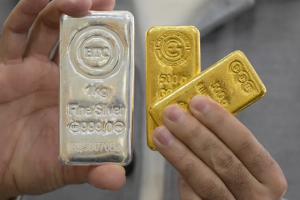
Spot gold fell about 5% to USD 4,617.07 per ounce, after having plunged nearly 10% on January 30, when prices dropped back below the USD 5,000 per ounce threshold.
Silver—previously surging alongside gold on safe-haven demand and speculative inflows—also came under heavy pressure. Following a 30% collapse on Friday, its worst session since March 1980, spot silver fell more than 4% to USD 80.63 per ounce.
Analysts said the correction followed Friday’s violent reversal, as expectations of imminent U.S. Federal Reserve rate cuts collided with a market reassessment of the Fed’s leadership outlook, after President Donald Trump nominated former Fed Governor Kevin Warsh to succeed Chair Jerome Powell when his term ends in May.
“The ‘Buy America’ trade is coming back. The momentum driven by bets on the Fed’s independence—an element that pushed gold and silver to breathtaking record highs just below USD 5,600 per ounce for gold and USD 122 per ounce for silver on Thursday morning—is now being unwound,” said José Torres, Senior Chief Economist at Interactive Brokers.
Christopher Forbes, Head of Asia and the Middle East at CMC Markets, said the sharp pullback in gold reflects a typical correction following an overheated rally rather than a reversal of the long-term uptrend.
“This is a familiar ‘correction gap’ after an extraordinary surge,” Forbes said. “Profit-taking, a stronger U.S. dollar, and fresh geopolitical signals from Washington have deflated a trade that had become overly crowded.”
The U.S. Dollar Index—which measures the greenback against a basket of currencies—has risen about 0.8% since Thursday. A stronger dollar makes USD-denominated gold less attractive to foreign investors, while higher yields increase the opportunity cost of holding non-yielding metals, as U.S. Treasuries regain appeal as a safe haven.
Warsh is widely viewed as a more hawkish policymaker, and his nomination as Fed Chair has helped support the U.S. dollar. At the same time, comments from Trump suggesting the possibility of reaching a deal with Iran have eased geopolitical risk, with WTI crude prices falling about 4% in Monday’s session.
In the near term, Forbes expects gold prices to remain elevated but volatile, as markets await clearer signals on Warsh’s policy stance.
Year to date, silver is still up about 16%, while gold has gained roughly 8%. Last year, both metals posted record-breaking rallies, surging approximately 65% and 145%, respectively.
“If the U.S. dollar weakens again or signs emerge that Warsh is more dovish than expected, bargain-hunting buyers will return,” Forbes said, maintaining a positive 12-month outlook for precious metals and arguing that gold could retest recent highs if the Fed continues to ease policy amid persistent uncertainty over growth and inflation.
















Leave a Reply