


U.S. Government Enters Partial Shutdown as of Saturday, Reopening Possible as Early as Monday
The U.S. government officially entered a partial shutdown as Saturday (January 31) began, despite the Senate having approved a budget agreement just hours earlier. However, a reopening could take place as early as next Monday.
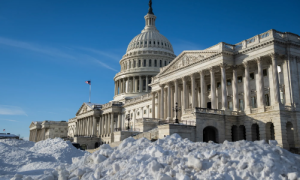
According to CNBC, the U.S. Senate late Friday evening Washington time approved a package of five appropriations bills by a vote of 71–29. The package funds the government through the remainder of the current fiscal year and also includes a two-week continuing resolution to give lawmakers more time to resolve budget disagreements related to the Department of Homeland Security.
However, for the budget measures to take effect, approval by the House of Representatives is also required. The House is scheduled to return to work on Monday, and until then, the U.S. government will remain in a partial shutdown. Once the House approves the agreement and President Donald Trump signs it into law, the government will reopen.
The most recent government shutdown occurred last year, when the U.S. experienced a record-long partial shutdown lasting 43 days.
On Friday afternoon, House Speaker Mike Johnson, a Republican lawmaker from Louisiana, said he would support the budget agreement passed by the Senate, particularly given that President Trump has expressed his backing for the deal. Johnson said he hopes the House will pass the budget package as early as Monday. Once approved by the House, the legislation will be sent to President Trump for signature.
Previously approved funding expired on Saturday for several U.S. government departments and agencies, including the Departments of State, Defense, Treasury, Homeland Security, Labor, Health and Human Services, Transportation, Education, and Housing and Urban Development, as well as related agencies and programs.
On Friday, U.S. Office of Management and Budget Director Russell Vought said, “The administration will continue working with Congress to address newly raised concerns in order to complete the budget plan for fiscal year 2026. We hope this disruption will be brief.”
The Senate agreement removed long-term funding for the Department of Homeland Security and instead included five other appropriations bills to fund the rest of the government. The deal allows the Department of Homeland Security—an agency recently criticized by Democrats over two incidents in which immigration enforcement officers fatally shot U.S. citizens in Minnesota—to operate under a temporary funding measure, with longer-term budget issues to be addressed later.
In a post on the Truth Social platform earlier this week, President Trump urged lawmakers to support the budget agreement that would fund most of the federal government through the end of the fiscal year on September 30, 2026.


















Leave a Reply