


Several influential countries in the Middle East are working to broker a meeting between the United States and Iran after Tehran signaled its willingness to negotiate with the administration of U.S. President Donald Trump.
The Financial Times, citing diplomats, reported that the talks are expected to take place in Turkey on Friday (February 6). Initially, the discussions would focus on Iran’s nuclear program and would not extend to other issues such as ballistic missiles or Tehran’s support for armed groups in the region.
Turkey, Qatar, Oman, and Egypt are coordinating efforts to arrange a round of talks, as regional countries step up diplomatic initiatives to avert the risk of conflict between the U.S. and Iran. Previously, Trump had repeatedly warned of tough measures against Iran and deployed a carrier strike group to the Middle East.
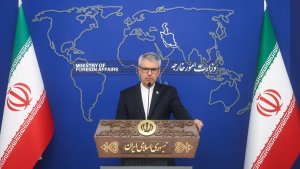
On Monday (February 2), Iran’s Foreign Ministry spokesperson Esmaeil Baghaei said Tehran hoped that “diplomatic efforts will bear fruit in the coming days.” According to him, the parties are still discussing the timing and venue, as well as the composition of the negotiating delegations.
Analysts say Baghaei’s remarks are the clearest signal yet from Iran of its readiness to engage in dialogue with the U.S., following weeks of escalating rhetoric from both sides.
Iran’s Fars News Agency cited an unnamed government official as saying that President Masoud Pezeshkian had “ordered the start of negotiations” with Washington, though the initial agenda would focus solely on Iran’s nuclear program.
Also on February 2, Trump shared an article on his Truth Social platform with the headline: “Trump Leaves Door Open to Iran Deal as U.S. Boosts Forces in Middle East.”
Previously, the White House had demanded that Tehran commit to permanently ending all uranium enrichment activities, accept limits on its ballistic missile program, and halt support for armed groups in the region. A regional official said that non-nuclear issues could be discussed through a separate negotiating channel.
Iran has stated that it is willing to negotiate, but only on nuclear issues, and will not participate if it is required to accept Trump’s broader demands. Tehran insists its nuclear program is for civilian purposes only and has repeatedly rejected calls to end all uranium enrichment.
Iran argues that it has the right to pursue such activities as a signatory to the Nuclear Non-Proliferation Treaty (NPT). Iranian officials have also said that the ballistic missile program is not up for negotiation.
For his part, Trump has repeatedly claimed that Iran’s nuclear program was “wiped out” after U.S. airstrikes on key Iranian uranium enrichment facilities in June 2025, when Washington briefly deployed forces alongside Israel during the 12-day conflict between Israel and Iran. However, the fate of Iran’s 408 kilograms of highly enriched uranium remains a major concern for Western powers.
Iranian media have reported that Tehran may be willing to discuss transferring this stockpile to a third country as part of a deal with the U.S. However, Baghaei said this issue would be addressed at the negotiating table rather than discussed in advance.
Last week, Trump warned that Iran was “running out of time” to reach a deal with the U.S. By the weekend, however, he said Tehran was negotiating “seriously” with Washington over its nuclear program and urged Iran to accept an agreement that would ensure “no nuclear weapons.”
Iranian media said that if talks take place, the negotiating teams would likely include Iranian Foreign Minister Abbas Araghchi and U.S. special envoy Steve Witkoff. Witkoff is expected to travel to Israel on Tuesday (February 3) for meetings with Israeli officials.
Last year, Araghchi and Witkoff held several rounds of indirect nuclear talks before Israel launched strikes on Iran in June. Since then, the two sides have maintained communication channels.
Meanwhile, Iranian officials have repeatedly warned that the country is ready to retaliate if attacked by the U.S. or Israel. Major General Abdolrahim Mousavi, Chief of Staff of Iran’s Armed Forces, said that following the June conflict, Iran has shifted to a more proactive defensive posture and is prepared to respond “swiftly and decisively

















Leave a Reply